
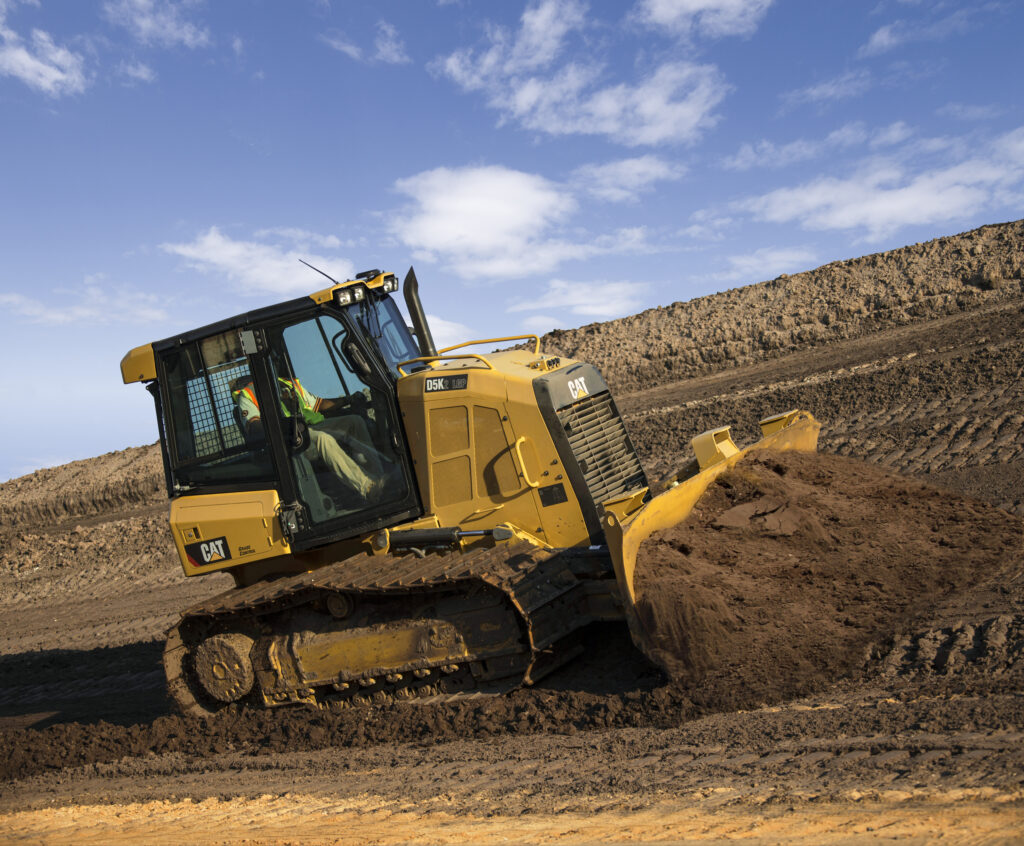
Nobody writes “rework” on a cost code. That’s the whole problem.
When a pad comes in three tenths high and the crew has to go back over it, that cost gets buried across four or five other codes. Fuel. Operator hours. A rented machine that stayed on the yard an extra two days. Trucking, if you have to haul material back in. By the time the job closes out, the number is smeared across the whole budget and it looks like the job was just a little tighter than you bid it.
It wasn’t tighter. You paid for the same dirt twice.
Where it actually starts
Most rework traces back to one of three things.
Somebody worked off the wrong revision. A design changed on Tuesday, the office knew about it Tuesday, and the dozer found out Friday.
Somebody worked off a stake that moved. Hubs get knocked out, cut sheets get wet, and one bad reference propagates across half an acre before anyone catches it.
Or somebody was guessing. Not carelessly. Just working with a blade and a feel for it, which is a real skill, but a skill that gets expensive at tight tolerances.
Each of those is an information problem. The operator did not have the right elevation in front of him at the moment he needed it.
What changes with grade control
The pitch for machine control is usually accuracy, but the thing contractors actually notice first is that the second pass disappears.
The operator sees cut and fill on a screen in the cab, against the current design, in real time. He is not waiting on a grade checker to walk out and tell him. He is not stopping to shoot a shot. Trimble puts the productivity gain from machine control at around 20 percent on average, and that is not because operators suddenly move faster. It’s because they stop redoing things.
The second effect is quieter but adds up. Your good operators can hand a machine to your newer operators. That matters right now, when everyone is short handed and the guy who has been running a dozer for twenty five years is training somebody who started in March.
The math is less dramatic than you think
You do not need a heroic scenario to justify this.
Take a single crew, one dozer, and assume grading rework costs you two days across a typical job. Put your own number on a machine day, fully burdened with the operator. Multiply by however many jobs you turn in a year. Most contractors land somewhere that surprises them, and they got there without counting the schedule impact, the extra material, or the conversation with the owner about why the pad was not ready.
Then compare that against a monthly payment, because you no longer have to buy this outright. Subscription and rental options exist specifically so a system can be a line item instead of a capital decision.
What we see across Georgia, Alabama and Florida
The jobs in our territory have gotten less forgiving. Data center pads in the Atlanta metro come with tolerances that used to belong to airport work. Solar sites in south Georgia and Alabama live and die on layout, and one bad row costs you real money. South Florida sites have their own personality, where you are working shallow, working wet, and elevation is not a suggestion.
The contractors doing well on that work are not necessarily the ones with the newest iron. They’re the ones who stopped guessing.
If you’re on the fence
Two things worth doing before you spend anything.
Look back at your last three jobs and put an honest number on how many days went to redoing work. Not a guess, an actual look at the daily reports. Most people have never done this and the number is usually the whole argument.
Then come see a system run. We do demo days for exactly this reason, because watching an operator hit grade on the first pass makes the case better than any spec sheet.
Give us a call at 404-505-8181 if you want to put one in front of your crew.